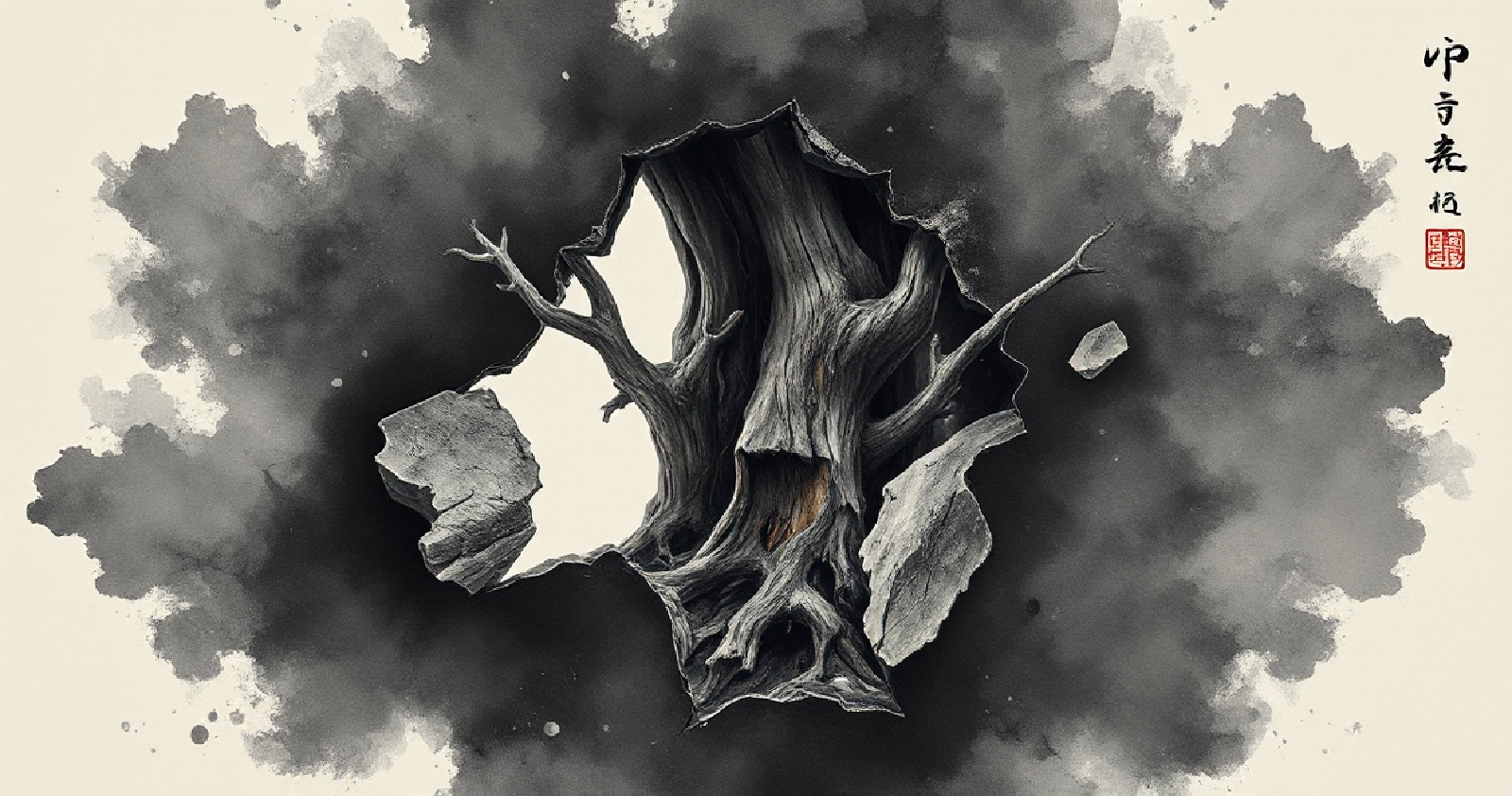
The tree that grows in shelter cannot hold against the storm. The one that grew sideways through rock, bent and gnarled — that tree stands for a hundred years.
Let me say something that will anger a great many people, and then let me explain why those people are wrong.
The mental health empowerment movement — the worksheets, the safe spaces, the school counselors teaching twelve-year-olds to “identify and name their emotional states,” the apps with daily affirmations, the group sessions where young people take turns describing their inner wounds — this entire apparatus, built at enormous expense and promoted with genuine compassion, is producing a generation less equipped to live than any that came before it.
Not in spite of its kindness. Because of it.
You were not prepared for the world when you left your family home. Almost none of you were. Your parents taught you table manners or English tutoring or how to get into the right university. What they could not teach you — because their own parents did not teach them — was how a human being is actually forged. The 家学, the deep family wisdom that shapes not just knowledge but destiny framework, was lost or was never cultivated in the first place.
And into that void stepped the empowerment industry.
It arrived with beautiful language: your feelings are valid, you deserve to be heard, healing is not linear, you are enough. To a generation of young people who felt unseen and unprepared, these words were water in a drought. Who could resist? Who would dare call it poison?
Master Chi will.
The Architecture of Permanent Victimhood
Here is the truth about what these programs actually build, regardless of intention.
When you teach a young person to sit with every discomfort and examine it, label it, share it in a circle, and receive validation for having experienced it — you are teaching them that distress is an identity worth inhabiting. You are teaching them that the correct response to difficulty is documentation and sympathy-seeking, not action.
The entire framework rests on a single premise: that making pain visible and witnessed is healing. But Master Chi has watched hundreds of young people cycle through this framework over the past decade, and I will tell you what I have actually observed. The ones who emerged with genuine 格局 — real life pattern, real capacity for the world — almost none of them arrived there through years of group therapy and journaling prompts. They arrived there by walking through fire and discovering, to their own astonishment, that they did not die.
Pain witnessed indefinitely becomes pain enshrined.
A young woman came to see me in Shanghai three years ago. Twenty-four years old, graduate degree, parents who had spent more than six hundred thousand yuan on her mental health support over five years — therapists, retreats, online courses, a coach who charged eight hundred yuan per session. She sat across from me in a teahouse near Xintiandi, and within fifteen minutes I understood the problem. She could describe her emotional architecture with the precision of a trained clinician. She knew exactly what her attachment style was, exactly what her “triggers” were, exactly which childhood experiences had produced which present-day patterns.
What she could not do was hold a job for longer than four months.
I asked her: what happens, in your understanding, when you encounter a difficult colleague?
She said: “I recognize it’s activating my fear response, so I give myself permission to step away and regulate.”
I set down my tea.
Have you ever tried to build a career while giving yourself constant permission to step away? Have you ever tried to hold a marriage together, raise a child, weather a business disaster, while remaining committed above all to your own regulation? Is this how you imagine the people who built anything in this world operated?
The Industry That Cannot Afford Your Recovery
Here is what most people do not know, or refuse to know, about the mental health industrial complex.
It is not designed to produce recovered people. Recovered people stop paying.
I am not saying every practitioner is cynical. Most are not. But the financial architecture of the industry — the apps that reward daily check-ins, the therapists whose livelihood depends on ongoing sessions, the wellness retreat businesses that sell “healing” as a lifestyle — creates a structural incentive to extend, not conclude, the process. Recovery is a one-time sale. Ongoing therapeutic relationship is a subscription.
Behind the scenes, among the people I know in private equity who have invested heavily in mental health platforms, the ideal user is described openly: someone who engages with the app daily, who feels slightly better after each session but never quite “arrives,” who associates the platform with self-care and therefore never cancels. This is not a conspiracy. It is simply business. But if you are twenty-two years old and you have been told that tending to your mental health is a permanent daily practice like brushing your teeth — consider carefully who benefits from you believing that.
The high-tier families I know do not raise their children this way. Not because they are callous. Because they understand something the empowerment curriculum has deliberately erased from the conversation: hardship is not a problem to be managed. It is the raw material from which character is made.
A client of mine — his family has run shipping operations out of Ningbo for three generations — told me once how his grandfather dealt with his father’s adolescent distress. His father had failed an important exam, was devastated, locked himself in his room for two days. The grandfather waited. On the third day he opened the door and said: “Are you done? Good. Come eat. Tomorrow we go back to work.” His father became one of the sharper businessmen of his generation.
That is not cruelty. That is the refusal to let a wound become a throne.
What the BaZi Chart Actually Tells Me
In my decades of reading BaZi — the Four Pillars of Destiny — I have never once seen a chart that promised a life free of suffering. Not a single one.
Every chart contains conflict. Every person’s major life cycle, their 大运, will rotate through phases that bring loss, humiliation, collapse, confusion. This is not pessimism. It is the structural reality of a human life written in the movements of heaven and earth. The question your chart answers is not whether you will face hardship, but what you will become when you do.
And what I have noticed — reading charts for wealthy families, for young people at the start of their careers, for executives in the middle of collapses — is that the people who have been trained to treat their own distress as an emergency to be managed are catastrophically underprepared for the decade-luck cycles that bring real darkness. The ones who learned early that difficulty was survivable, even instructive, walk through those years differently. Bent, perhaps. Slower than before. But walking.
The spiritual cultivation required to navigate a life is not built in a therapist’s office. It is built in the years when you had no choice but to figure it out yourself.
The Low-Tier Response and the High-Tier Response
A low-tier family, when their child is struggling, rushes immediately to fix the feeling. Make the child comfortable. Remove the source of distress. Validate everything. The goal is the child’s comfort right now, because the parents cannot tolerate witnessing the child’s pain.
A high-tier family, when their child is struggling, asks a different question: what is this difficulty teaching my child, and how do I make sure they receive the lesson rather than escape from it?
This is the gap that cannot be closed with a scholarship or a credential. It is a difference in understanding what a human being is for.
I am not speaking of manufactured cruelty or neglect — those are different matters entirely. I am speaking of the difference between a parent who says “you don’t have to do anything that makes you uncomfortable” and a parent who says “this is uncomfortable and you are going to do it anyway, and afterward you will know something about yourself that you cannot learn any other way.”
The first parent loves their child’s peace of mind.
The second parent loves their child’s future.
The Thing I Had No One to Tell Me
I will say something now that I rarely say.
There was a period in my own life — I was in my early thirties — when everything I had built fell apart. Business gone. Relationships strained beyond recognition. The kind of collapse where you wake at three in the morning and the walls feel like they are pressing inward. I had no workshop to attend, no counselor who specialized in my particular flavor of failure. There was no app with breathing exercises.
What I had was a small room, a very limited amount of money, and the absolute necessity of continuing to move.
I do not say this to romanticize suffering or to pretend I handled it gracefully. I did not. I made terrible decisions during that period and I am still paying some of those debts. But I will tell you this: it was precisely the absence of a soft landing that forced me to locate something in myself I did not know existed. The capacity — not to feel better — but to act anyway. To move while in pain. To refuse the comfort of declaring myself a wounded person.
That capacity is the only thing that actually matters when the real tests come. And they will come. Your 大运 does not check whether you are ready.
Keep Walking
There is a pattern I have watched in every person who eventually builds something real with their life.
They do not arrive at strength by studying their weakness. They arrive at strength by moving, consistently, in the direction of what they want, even when the movement is painful, even when the pace is humiliatingly slow. Strength is not the absence of difficulty. It is the accumulated evidence, gathered over years, that difficulty did not stop you.
This is what the empowerment curriculum cannot teach and will not teach, because it is built on the opposite premise — that you must first be healed before you can move. But the healing Master Chi has observed in his years of reading charts and watching lives unfold is never a prerequisite. It is a consequence. You do not heal and then live. You live and, somewhere in the living, you realize you have healed.
Stop waiting for permission.
The noble benefactor, the Gui Ren, the mentor who changes a life — in every reading I have ever done, they appear to people who are already in motion. They do not appear to people sitting in careful examination of their own wounds. The world rewards movement. It rewards presence. It rewards the young person who walks into the room thinking about what they can build, not about what was done to them.
He who tends only his wounds remains always a wounded man. He who walks despite his wounds becomes, in time, something stronger than a man who was never wounded at all.
You are young. Whatever damage has been done — by your family, by your failures, by the ordinary cruelty of a world that was never designed to be gentle — I know this: it is not the end of your story unless you decide it is. I have read enough charts to know that the most difficult early years often belong to the most powerful destinies. The pressure that forms a diamond is not kind pressure.
Do not let anyone — not a program, not a platform, not a beautifully worded curriculum — convince you to make your wound your home.
You were not born to be managed. You were born to move.
Go.
Master Chi wishes you clear eyes, strong legs, and the fortune to discover what you are truly made of — before the years run short.